Change font size Change site colors contrast
Uncategorized

Purite – more than WOW

13 września 2017 / Monika Pryśko

Interview with Szymon Kaźmierczak, a man who proves that we can create fragrant cosmetics that furiously foam and shine like moon dust using only natural ingredients.

This is a preface to introduce you to the Purite brand. I browsed Purite's website carefully, because natural cosmetics are something I have recently been choosing more and more willingly for myself. I only wonder if it...

Interview with Szymon Kaźmierczak, a man who proves that we can create fragrant cosmetics that furiously foam and shine like moon dust using only natural ingredients. This is a preface to introduce you to the Purite brand.

I browsed Purite’s website carefully, because natural cosmetics are something I have recently been choosing more and more willingly for myself. I only wonder if it is possible to create truly natural cosmetics when there is so much chemistry on shelves in drugstores.

It’s nothing new, it’s all about the money. Most cosmetics available in drugstores contain petroleum derivatives and water, i.e. the two cheapest raw materials. The combination of water and oil ensures long shelf life of products, because there is no way something will happen to them. The product is stable, i.e. regardless of the time and manner of storage it doesn’t change its consistency or fragrance, and the individual batches don’t differ from each other. The product has to be safe, predictable and durable due to the content of countless chemical additives. Meanwhile, these ubiquitous chemicals in cosmetics, food and clothes kill us.

However, I, for example, don’t think about this durability. The fact that something can stand on the shelf for a long time doesn’t influence my purchase decision. I just wonder if I should choose the one available online, the one that looks like a pharmacy product or a plastic jar from beauty supply store.

But the customer’s opinion isn’t the most important for producers, the distributor’s opinion is also significant. When cosmetics are created with expiration date of several years, no additional costs arise for both the manufacturer or the distributor. The required storage method is also important. The cosmetic which has the longest shelf life in Purite is soap, which retains its best properties for two years. All other cosmetics that are based on oil have an expiration date which is the same as the oil’s expiration date. Most often it’s one year. Cosmetics based on plant water, very sensitive to the influence of external factors, have a validity period of only six months. In addition, we use special packaging to ensure the best possible durability of our products.

For example, I’ve been using hazelnut oil for some time now and I love the immediate effect it gives – the skin is soft and smells nice. And I don’t think about what will happen with my skin in a while, I like what I feel at the moment.

Our clients are already thinking about how to make the effect they want to achieve last longer than one hour. Apart from anointment and this instant “wow” effect, they want to supply the skin with substances that will ensure that in 10 years they can enjoy young and fresh looking skin. Often, the ingredients responsible for a great start effect for prolonged use have a bad effect on the appearance of the skin. A lot of cosmetics are specially composed in order to provide customers with immediate desirable effect, but in fact they hide a real problem that comes doubled back in time. Luckily, our users are gaining more and more knowledge on skincare, as they did in terms of organic food, for instance. Furthermore, a very popular argan oil, having great reputation, can make our skin dry when used daily. Only proper balancing of ingredients, composing them well, will give the right effect.
We focus on conscious people, who not only appreciate well-thought-out formulas of our cosmetics but also appreciate our recyclable packaging (glass, paper), our zero waste aspiration and therapeutic effects that our ingredients have. We want to start a long lasting relationship with such customers.
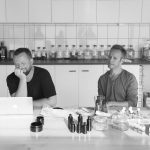
It seems to me that despite our awareness in making healthy choices, we’re in need of proper education in this area. We all reject chemicals, check the composition of products, focus on natural choices – that kind of restrictions calm our conscience and we do not delve further.

That’s why there are such long descriptions on our website. We try to explain to customers the mechanism behind every cosmetic. Why does combining one substance with another lead to selected result? Some people say that these descriptions are too long, but we believe they are necessary.

What else grabs your customers’ attention?

I have the impression that the fans of our brand are aware and well-educated. The first thing they do is read the composition of the cosmetics. Of course, they also pay attention to the way our cosmetics present themselves and that’s good, because we try to turn away from the typical economic image.

Your packaging is beautiful! We are a generation that pays a lot of attention to the way a product looks like. We buy with our eyes.

This is thanks to Sebastian Kubiak, who is responsible for the image of our products … Our customers appreciate our aesthetics and we are aware of this. Moreover, our packaging is environmentally friendly. This is very important to us.

Tell us about the therapeutic properties of your cosmetics. How to make a home spa and feel this therapeutic power even when you have only 15 minutes a day for yourself?

The therapeutic power of the ingredients we use, i.e. herbs and ethereal oils, accompanies you throughout the day, you wear them on your skin all day long. The fact, that we spend 3 minutes to put on a cosmetic, doesn’t mean that it works only for 3 minutes. If you apply a nettle to your face, its antibacterial effect won’t be perceptible for just a moment, but the entire therapeutic and nursing process will take much longer. Of course, our cosmetics are not medicinal, but we want them to improve the mood through aromatherapy and stimulation of the skin to counteract possible problems. Plants, herbs and oils we use have the effect of improving mood and condition of the skin.

Do your customers ask you questions like – I need something to give me energy boost every morning. Can you give a specific answer?

Now clients most often ask us what to do with dry skin or thread veins, what to do with irritated baby skin. We get a lot of ordinary questions and we try to find relevant answers. Because skin problems are affecting more and more people. Thoughtful treatment gives great results.
The subject of how to add energy in the morning, eliminate the autumn blues, or simply add yourself courage … that subject still needs exploring … it’s still a bit of a mystery. We hope that by the end of the year we will be able to present everything we’ve come up with.

That’s awesome, because people buy not only packaging, but they look for something specific as well and it’s great that they can find it here.

Our clients buy the knowledge, matter-of-factness and ingredients that actually work.

Uncategorized

Here, the country really supports families with children. Mom in Germany.

11 października 2017 / Alicja Skibińska

Being a parent is not a piece of cake - mothers of both younger and older children can confirm that.

This task requires a lot of strength, perseverance, and financial resources. Our individual characteristics as well as external factors, such as the country we live in, determine our experience as a mother. Women living in Germany shared their experiences with us. Is it...

Being a parent is not a piece of cake – mothers of both younger and older children can confirm that. This task requires a lot of strength, perseverance, and financial resources. Our individual characteristics as well as external factors, such as the country we live in, determine our experience as a mother. Women living in Germany shared their experiences with us. Is it easier to give birth and raise children abroad?

For years we have been constantly hearing that in Poland too few children are born and the age of women who become mothers for the first time has been steadily increasing. Of course, the reasons for this may be very different: some of us don’t think about starting a family at all, others consciously postpone this decision in order to devote youth to their own development, education and career or they wait for a suitable partner, and yet others can’t have children for health reasons. However, it’s difficult to miss the fact that one of the main factors that don’t allow young people to have children is low income. The cost of maintaining a child is really high, and it’s hard to call average income in Poland impressive.

The desire to improve financial situation is one of the most frequently cited arguments for emigration. Many Poles move to another country because they don’t see any chance for a prosperous life in their homeland. This issue becomes particularly important when we decide to have an offspring. Living in a rented one-room apartment with a beloved person may be charming, but such conditions are certainly far from ideal when it comes to raising children.


Agata

Agata is 29 years old, she lives in Hamm, and considers higher income the main advantage of living in Germany: a family where the husband earns a little more than the national average and the wife mainly takes care of home and works casually if she wants can afford to spend holidays abroad every year and have dinner in a restaurant once a month or so. She emphasizes that she doesn’t have to worry about meeting children’s basic needs because she receives extra money for them: 182 Euros, the so-called Kindergeld, for every child in the family. Agata has two, which means a monthly cash injection of 384 Euros – this amount is sufficient for the purchase of clothes, education fees and paying for school excursions without any problems.

The availability of education and development opportunities are another argument for that she adds: the music school or other extracurricular activities are not very expensive, so most people can afford them. And there’s no pressure to be the best. If a child has to repeat a school year, nobody points fingers nor ridicules it.


What else gives young parents sleepless nights? Certainly, one of the greatest fears is children’s illnesses and related contact with the healthcare system, which is not always up to the task. Agata recalls that she had to put aside about 200 PLN a month for medicines in Poland – in the case of two preschoolers, various infections were commonplace. In Germany, children’s medicines are free of charge, which has greatly alleviated the burden on her household budget. Moreover, she expresses great praise for the German ways of taking care of health, which are very different from Polish approach. Some mothers in Poland consider it to be a disadvantage, but I’m a supporter of natural medicine and I’m glad that German doctors do not prescribe the whole Mendeleyev’s table for a common cough. Moreover, in Germany, regardless of the weather, children play outdoors. It doesn’t matter if it’s rainy, windy or 10 degrees below zero. Each parent is obliged to equip the child with a so-called matchhose, which is simply ortallion overalls and wellingtons. It’s similar at school: children spend each break on the school sports field, no one sits by the wall indoors. Such a way of strengthening immunity seems to bring great results, because Agata’s children don’t fall ill so often here.


Martyna

Martyna, a 22-year-old who has been living in Duisburg for 3 years now, is also enthusiastic about this: I think that one of the greatest advantages of parenthood in Germany is free assistance of a midwife and a doctor before birth.

The midwife always came in when I needed help and after the birth she looked after us for 8 weeks.


The birth school and Yoga or swimming courses are also available free of charge for pregnant women.
Since Martyna is unemployed, she got money from the employment agency and Caritas for a newborn baby’s layette – in total it was as much as 840 Euros. In addition, Kindergeld is granted for every child (regardless of family income) and allowances can be applied for in case of a particularly unfavourable financial situation. At the same time, medicines are reimbursed and the amount of fees for nursery and kindergarten depends on the child’s parents’ earnings. This allows Martyna to take advantage of free, 35-week nursery care for her baby.


Marta

Marta is 40 years old and lives in Wuppertal. She openly says that the decision to move to Germany was right: Thanks to this, I could afford to start a family. Here I’m not afraid that the world will suddenly collapse on my head if I lose my job. In such a situation, I would have one year to find another job, and at that time I would be entitled to a certain percentage of my last salary. In addition, Kindergeld alone, which is a child benefit, is enough to buy food, clothes and toys. That’s almost 200 Euros! Marta also points out that food in Germany is relatively inexpensive (especially when compared to average income) and that shops have special discount programs for children’s products.

Financial security makes it possible to focus fully on family life. Marta recalls that in Poland she and her husband were full-time employees, making extra money while doing overtime, and yet they couldn’t afford the comfortable life they are living today. In Germany, they come back from work and can concentrate on children, have a rest and plan their future without any hesitation.


Many Polish women complain about the conditions under which they gave birth. Both hospital equipment and the approach to patients often leave a lot to be desired…. Marta is delighted with the perinatal care in her place of residence: While giving birth, I could rent a family room in which I could stay with my husband and our son – if only we wanted to, we could wait there for the birth of our daughter and be together from the very first moments of her life. The price of such a room is affordable, and it provides you with 100% privacy. During my stay in maternity ward I didn’t experience any incompetence, insults or offensive remarks. Everything I could have imagined was there: a committed midwife, a childbirth plan, skin-to-skin contact, assistance with breastfeeding, a selected person or persons in the childbirth room. Additionally, as a mature mother-to-be I’d had access to free prenatal examinations.

Marta also mentions Germany’s multiculturalism as the undoubted advantage of bringing up children there: Children are growing up in acceptance of differences in skin colour and religion. Children quickly become acclimatized and get in touch with others – these differences, which we were taught to notice for years, simply don’t matter to them.


Monika

Monika, 27, who has had experience of living in Germany, also recognises the benefits of getting children familiar with other cultures: The great advantage of living in Munich was that it’s a multinational and multi-religious city. As a mother, I was constantly meeting women from all over the world who spoke different languages and presented different approaches to motherhood. After some time I was able to see the differences in how children are brought up, how different mothers look after children and how they talk to them. For children, daily exposure to diversity is certainly an invaluable benefit.

Monika recalls that the first thing she noticed after her arrival in Munich was the ubiquitous presence of children in the public space and a partnership approach to parenthood.


Both mothers and fathers take their children not only to places specially designed for them (such as playgrounds), but also to luxurious boutiques, cafes and even to Biergarten, typical German beer gardens. In addition, many children travel by public transport, although German parents make sure that there’s no shortage of movement and time spent outdoors. For this reason, regardless of the weather, they take them to school on foot or by bike. This is possible, among other things, thanks to the developed infrastructure: The pedestrian communication routes are well prepared – getting from one housing estate to another is not a problem. There’s also no problem of pavements ending abruptly, what we can often see in Polish cities.

It was a slight shock for Monika to observe that in Germany it’s socially acceptable to take the child to fashionable and crowded places, even after dark. And because drinking alcohol in public places is permitted there, you can often come across adult beer drinkers with their children. Monika emphasizes, however, that everything is done with proper culture: What’s interesting, despite such habits, there are no headlines about irresponsible, drunken parents who, under the influence of alcohol, harmed their child or put their health or life at risk.

Although in Germany children can become accustomed to human diversity, there’s no emphasis on the differences in wealth. According to Monika, Polish parents tend to dress up their teenagers, present them in thoughtful styles, pay attention to brands and trends. Of course, the people of Munich also buy expensive products for their children, but in the playground everyone is equal and a glimpse at the clothes of a child doesn’t allow to determine the financial standing of its parents. While playing outside, the toddlers wear old, worn clothing or overalls.

Monika also draws attention to the fact that Poles tend to comment on outfits of the children they come across. Since they are treated as „national good”, it’s a common thing to pay attention to their parents’ choices. In Germany there’s much more tolerance in this regard: I haven’t encounter a situation in which a stranger would stop in the street and commented critically on my child’s clothing in the context of the weather – no one ever commented the lack of a cap or socks, which in Poland happened frequently.

In turn, the cries of a child heard from behind the walls aren’t ignored: When it comes to unpleasant situations – we found ourselves living in the area where no small children lived, but there were a lot of older, grumpy people (unfortunately, not deaf) instead. My son was going through the famous „two-year-old’s rebellion” at that time and, unfortunately, every day was a battle. It was unthinkable for the neighbours that some child had the courage to disturb Mittagessenruhe (i. e. the dinner time, which usually lasts from 12:00 to 15:00). In the beginning, the neighbours were making unpleasant comments, but at some point it escalated to thumping on the doors and walls (e.g. when the son woke up at night and started crying) and unexpected visits by the police. It may not seem that way, but such situations were most probably proof of the neighbours’ concern: we also had a visit of employees from infamous Jugendamt. Fortunately, this institution hasn’t turned out to be as cruel as it’s presented in Polish tabloids, which publicize the cases of Polish children taken away from their Polish parents „for no reason”. We received a lot of support in explaining the whole situation, we were offered free doctor visits, community nurse and a Polish psychologist. Such a situation is not, of course, a norm. It’s not like every Polish family moving to Germany is on the spotlight – it was simply bad luck that we had such people for neighbours.

However, the conclusion from this story is that in Germany there’s no place for callousness in terms of possible harm to children – at some point in time, one of the neighbours was really worried about our son’s crying and screaming.

The Jugendamt officer who was dealing with our case could not give the name of the person who reported us, but he revealed that the person seemed really frightened and concerned because there was probably something wrong with the child.


Justyna

Justyna, a 33-year-old mother of three adopted children: 4-year-old twins and their 1-year-old brother, is also satisfied with the decision to emigrate a year ago. A very good „social” from the German Government to begin with. Here, families with children are really supported by the country, and every child gets 200 Euros per month until they are 18 years old. Did you know that here you get money even for sitting with your child at home? What’s more, this so called elternzeit is well paid, approx. 400 Euros a month and you receive it for a relatively long period of time. Moreover, medicines for children under 15 years of age are free of charge, which shocked me beyond belief – hands up who wouldn’t appreciate it? Generally speaking, earnings are at a very high level, food is relatively cheap and you don’t have to walk the aisles with a calculator.

Another advantage of living in Germany is the abundance of attractions for children. Moreover, almost every city hosts weekend festivals, which are a fantastic way to spend time with your family. Unfortunately, not everything in this country is just as exciting. According to Justyna,

the kindergarten system is a disaster


You have to actively participate in kindergarten activities with your child for 4 weeks – you can’t just leave it for 8 hours. Nobody cares if you have a job, a language course or other important matters to attend to. During the first 4 weeks of your child’s stay in the kindergarten, you sit there every day for 2 hours. Unfortunately, most kindergartens don’t have their own catering base and every child has to bring their own meals with them. What’s more, many German moms are not working, so the children are taken home for dinner and then returned to spend there the other part of the day. I remember the awkward moment when I said that my children would be eating in the kindergarten.

Justyna is not so keen on the freedom the children receive, either – she believes that nursery school carers don’t teach them any rules and to some extent neglect their duties. In addition, 3-year-olds belong to the same groups as 5-6 year-olds. The idea is to teach older children how to help and care for the young, but it doesn’t always work. In real life, it looks like a jungle and these poor little ones can’t communicate effectively with the older children. What is more, ladies in the kindergarten pretend that they don’t see anything and very rarely react to children’s bad behaviour. Need an example? My son burnt his hands because he put them on the stove. Yes, on unprotected burners that were switched on.

Does she therefore regret the decision to emigrate? Fortunately, the advantages outweigh the disadvantages by far, and temporary problems can always be solved. The only drawback is kindergarten, but from September kids start a new one. I hope it’ll be much better there. Anyway, life in Germany is amazing!

As you can see, our heroines found happiness abroad and consider their choice of departure right. What do you think? Is emigration a good way of providing children with optimal conditions for development? Or do you think that nothing can compare to growing up in your homeland?


Photo by Hector Bermudez on Unsplash
This error message is only visible to WordPress admins

Error: No connected account.

Please go to the Instagram Feed settings page to connect an account.

Mother-Life Balance to zdecydowanie mój plan na macierzyństwo po urodzeniu drugiego dziecka.

Sylwia Luks

The Mother Mag to mój ulubiony magazyn z którego czerpię wiele porad życiowych oraz wartościowych treści!

Leszek Kledzik

The Mother Mag logo